I would just like to point out straight away that I do not particularly care for the narrative of this film, it goes down the same trodden path that even student filmmakers would think of as cliched. It tells the story of the "Salaryman", the average Joe whose life is so mundane and repetitive that even he cannot differentiate one day from the next. He then decides to keep track of his own existence, by taking photos of himself sporadically over the course of a working day.
The way in which the film stands out and appeals to me, is through its use of sometimes awe-inspiring cinematography. There is no question of doubt when it comes to the look of this film, the shot design is so measured and composed - it's almost as if the camera doesn't exist. For me personally, framing and mise-en-scene are two of the most important aspects of filmmking, there has to be at least one element to every shot that either looks beautiful or carries subtle meaning through what is presented within the image. Saying this, I believe that the film would improve greatly if it dropped the protagonists narration and tried to convey the narrative meaning by only using the images and the natural sounds that occur within the film's own unique world.
It took me at least seven of Inbindable Volume's fifteen minutes of running time to pinpoint what was drawing my attention to it so much; I then realised that it was the fact I was drawing parallels between the narrator of this film and Peter Jones - the ever present voice of the guide in "The Hitchhikers Guide To The Galaxy" radio and television series'. Some may take that comment as slightly flippant, but I mean it in the greatest respect in regard to both pieces of work.
The piece sets out to describe the scenario of events that both lead up and add to the demise and decay of concepts and ideologies once they have been turned into a material object. This is achieved through the clever way of repeating the same narration throughout the film, but changing the tense in which the words are being spoken and by splitting the screen into three sections - all filming aspects of the same immediate location. The film begins with a beautifully framed and faded shot of a piece of translucent, patterned glass; the camera begins to zoom towards the glass, which in turn reveals that this shot is the central screen in between two others. The other screens begin to to fade in, revealing the same shot of the glass from slightly different perspectives and distances. As the screens begin to fill and come to life, it is revealed that theses pieces of glass are windows that make up the roof of a building. The camera pans and zooms either in or out in very coordinated and orchestrated ways, always revealing new aspects to whatever images of Birmingham's Central Library are being shown within the three screens.
The structure and technicality of the piece contain certain parallels with the piece that Megan and myself are working on at the moment. The framing of the shots and the attention to detail, from a purely cinematic viewpoint is astounding and although I do like the idea of the concept, it is the visual aspect rather than the ideological one that holds my attention throughout.
One of my weaknesses as a person is that my mind can make me believe that I'm doing something helpful and for all the correct reasons, when in reality my actions and thought process is actually becoming counterproductive. In relation to the task in hand this meant that I was getting ahead of myself and in fact, the two of us as a group. Hot on the heels of producing a demo version of my own minute, I quickly thought of ways that I could take Megan's initial idea, make a demo of it and add onto my own. Believing that I was being helpful rather than overbearing, I continued to work and had no inclination in my own mind that I was doing anything wrong, even though it's quite clear that I was.
This proved to be a short lived problem, due to the fact that the pair of us have no issue with telling things like they are - this and other similarities possibly contributed to the divide, clash and eventual balance of order. This balance of order and the process of getting there has been beneficial to both of us; two people who beforehand were used to working in a sort of "One man band" mentality and I'm very pleased that I have eventually learnt how to collaborate with a person who came from a similar place creatively.
We both moved forward from this learning curve and began sharing thoughts of ideas for the final minute and also ideas from a visual standpoint, which lead our train of thought to the fact that we needed to find locations that suited the overall sound of the piece. We also incorporated a 'freedom to create' type of policy, meaning that could go out on our own and discover sounds that might work.
To get a feel for the project, I thought that I could record some rudimentary sounds that would act as a kind of rough version of the finished project. This approached appealed to me, mainly due to the fact that most of the musicians I have an interest in create demo recordings of material in its earliest stages - especially Pete Townshend, who would record full albums of materials in demo form and then take it to the band to see what they thought of it. I probably became quite self indulgent in relation to this approach for my own good, but I will touch upon those issues in a later post.
After booking out a Zoom Recorder form the Creative Media Centre, I waited until the flat I live in was empty and thus quiet enough for me to experiment with and gain whatever volume and style of sound I wanted. I used most of the pots and pans in the kitchen to try and discover a rhythm that I could use within my minute; although quite hit and miss, the process did prove to me that it is possible to use objects available in your immediate surroundings to be creative. However, the most useful aspect of my surroundings was the acoustic temperament of the hallway that runs for the entire length of every bedroom in the flat. The way that sound bounced around this space provided the slightly haunting echo that I wanted to use. I had made a list of potential songs that I would like to sample lyrics from, then basically just placed the recorder at the opposite end of the corridor to myself and started singing the sections that I intend to use.
After I had done this, I came across an episode of the "South Bank Show" from 1982 that focused on the production aspects and release of Peter Gabriel's fourth solo album, "Security". During a segment of the programme, Gabriel showed how he used disused objects to capture soundbites he would then use to create rhythms and beats that would be incorporated into his music. I was glad that this behaviour was justifying what I had been doing, apart from he was smashing T.V. sets, merging different cultures and I was clanging pots and pans together in a Sheffield student flat.
The project being entitled "Sense of Place" gives the two of us quite a bit of freedom to pick and choose what we would like the piece to become, but it also sadly allows us the ability to walk down the same trodden path that other people may choose to take. I think Megan and myself should try to be as unique as we possibly can in relation to what we include in the piece, by trying to stay away from the generic sound of the city routine and perhaps concentrating more on going to a deeper place. I'm not trying to take anything away from that particular concept, but if pursued with anything less than a fresh outlook could prove tedious. The main aspect of the piece that we both decided on quite quickly, was that we would split the piece - both sound and image - into three one minute sections. I would take the first minute, Megan the second and it would culminate with the two of us putting a joint effort into the final segment. So when embarking along on this creative process, my initial idea was to capture a definite feeling of isolation and alienation within my own minute. I felt that I could create this kind of atmosphere by using one static shot, this shot then slowly zooms inward toward a discarded nondescript object - a coffee cup left behind on a train station table was genesis of my idea. The use of the slow zoom was inspired by a scene from the film "Somewhere" directed by Sofia Coppola. The scene in question focuses on the main character - portrayed by Stephen Dorff; the character is sat motionless in a chair, his face totally obscured by prosthetic clay. The shot begins from a very wide perspective, but over the course of several minutes slowly zooms in closer towards the characters covered face. For myself at least, this scene proved to be very powerful for numerous reasons. The most prominent probably being that the shot was able to be held for that amount of time without becoming uninteresting or self-indulgent. So by drawing from various sources of inspiration, I hope to achieve a feeling of isolation that will really set the piece off in a unique direction unto itself.
When I heard Megan's thoughts on her minute, the two ideas seem to fit together perfectly and although we had not initially set out to create a more structurally inclined piece, a the various elements began adding together in a way that couldn't be ignored. Her idea focussed around a seaside location and she had taken cues from the idea of my minute and tried to incorporate a similar theme - namely, using an object and location that personifies and embodies the feeling of isolation and loneliness we were aiming for.
When this project was first introduced to the group, my initial thoughts centered around the image of the piece. These images would form the spine of an idea that would grow, twist and develop as the project progressed - this seems to be the basic structure that my mind works with at the beginning of any form creative activity. However, the most prominent influencing effect on my thought process usually comes from what I'm experiencing or being exposed to on a musical level during that specific period. Music - more than anything else - is the driving forced behind the generation of visual concepts and ideas in my mind. At this point in time, I have been listening to quite a varied selection of records from musicians including Robert Plant, Peter Gabriel, Al Stewart, Bert Jansch, Tim Buckley, Jackson C. Frank, Joni Mitchell, Kate Bush, Eddie Vedder; the list could go on and on. I like music to have a story and to conjure up vivid imagery that sticks in the brain. All of the artists listed above have musical roots that stem form either blues or folk music, the music of the soul. The variations of these musical styles have a place in any country on Earth, whatever country you visit there is a unique tribal rhythm. Both Robert Plant and Peter Gabriel have always been artists that draw influence from other cultures and bring this influence into their own music, with the latter being a co-founder of WOMAD (The World Of Music, Arts and Dance festival). So at this point in time I would really like to create a piece that comes from a musical area of thought, employing the use of real world sounds and music. Examples of this technique being employed in and among my own influences can be located within The Who's monumental 1973 album"Quadrophenia". It tells the universal tale of teen angst through the story of 1960's Mod Jimmy, a boy whose personality is fractured into four separate pieces. The album also uses the sound of Jimmy's life to move the album's story along from place to place, almost like the "wild track" from a film soundtrack. The sound of the sea - particularly crashing waves - feature prominently throughout the album's running time; other sounds include a thunderstorm, the sound of a busy London train station and the melancholic echo of previous Who songs that fit in with the story's time period. These are the microscopic details that help set certain moods and allow the albums tonality to flow, and it is these little details that I would love to include in the finished piece.
Wednesday, 16 October 2013
Steel Homes: A Prison for the Soul
The personification of the loneliness of melancholy; that
would be the only way I could describe the feeling inside as I sat; detached.
Detached from the wraith like creatures stalking the halogen lit hallways,
desperately searching in some way for reconciliation, redemption; even freedom.
It may strike others as overly ironic if they thought that the filmmaker wasn't
being deliberate, but for me you just wouldn't make a film about
over-attachment that felt so detached without clear foresight into what you
were doing. It’s a very clever thing to do, to be able to juxtapose the tone
and feeling of a film from the subject matter and have it work so seamlessly.
In the hands of another director, this could have just become another piece of
uninteresting, overbearing schmaltz, but by taking an non-conventional direction
the film becomes almost like a scientific study – with the camera morphing into
a curious eye, watching with a sense of wonder and bewilderment.
I believe the director’s key aim was to show how the
unavoidable passing of time affects our psychological make-up. Although every
individual story in the film is different, they all deal with the need to hold
on to elements of the past and the need to have a sanctuary; a home. Another
recurrent theme that I felt was apparent was the feeling that I was looking at
a prison of souls. The way the camera statically observed the grey corrugated corridors,
filled with the echo of locking doors. I can, to some extent identify with the
people in this film; I too have always felt a compulsion to hold onto objects
just in case. However with time I have reduced these compulsions, not because I
had to but because I wanted to. I discovered that our minds and bodies – as vessels,
are the only objects that are able to carry our story with total purity and
conviction. So I deeply sympathise with the floating, faceless voices that
carry this lonely narrative across the usual barriers of documentary
filmmaking, until it becomes something else entirely.
It was the ‘arms-length’ approach that impressed me the most
about the film; however I believe many people would have looked at the setting
and subject matter in front of them and gone down the conventional road of Vox-Pop
interviews, garnished with a distinct lack of subtlety. This film doesn't dumb
things down for its audience; information trickles down throughout the running
time, but most importantly more questions are asked rather than answered. This
allows us, the viewer to think for ourselves. Too many filmmakers spoon-feed
information to their audiences; they wish to be the all mighty purveyor of the
facts, looking clever above the rest of us. Whereas this sits level with the
audience and shrugs its shoulders along with it, and to me this conveyed
perfectly the disgruntled and dysfunctional nature of modern society - I’m sure
we have so much to say, but who’ll listen anymore? We might as well just shut
ourselves off and let time take its course.
The lack of movement in the camerawork, takes the films underlying
tone of loneliness to even greater heights. Silent static eyes that just sit
there and watch the world go by, because when a camera is whizzing and zipping
about, we can ascertain no sense of spatial perspective. The director has made
a very conscious decision to use these shots; shots that make the environment
look cold and empty. Choosing to use a very non-linear approach to the imagery
when showing the people, once again cleverly stokes the fire of detachment
whilst also building up the affecting human element of the film. Once you team
the visual aesthetic with its audible counterpart then - for me at least, a
vacuum was created. A space that looks so grim filled with objects that bring
light, warmth and even meaning back into the lives of those that possess them; with
the heart-warming/breaking voices filling the lonely corridors with the stories
that are trapped within the walls.
Even if the tonal shifts will disjoint opinion for some, for
me the director managed to create a brilliant fusion between contrasting emotional
and visual feelings.


 To get a feel for the project, I thought that I could record some rudimentary sounds that would act as a kind of rough version of the finished project. This approached appealed to me, mainly due to the fact that most of the musicians I have an interest in create demo recordings of material in its earliest stages - especially Pete Townshend, who would record full albums of materials in demo form and then take it to the band to see what they thought of it. I probably became quite self indulgent in relation to this approach for my own good, but I will touch upon those issues in a later post.

 After booking out a Zoom Recorder form the Creative Media Centre, I waited until the flat I live in was empty and thus quiet enough for me to experiment with and gain whatever volume and style of sound I wanted. I used most of the pots and pans in the kitchen to try and discover a rhythm that I could use within my minute; although quite hit and miss, the process did prove to me that it is possible to use objects available in your immediate surroundings to be creative. However, the most useful aspect of my surroundings was the acoustic temperament of the hallway that runs for the entire length of every bedroom in the flat. The way that sound bounced around this space provided the slightly haunting echo that I wanted to use. I had made a list of potential songs that I would like to sample lyrics from, then basically just placed the recorder at the opposite end of the corridor to myself and started singing the sections that I intend to use.


 At this point in time, I have been listening to quite a varied selection of records from musicians including Robert Plant, Peter Gabriel, Al Stewart, Bert Jansch, Tim Buckley, Jackson C. Frank,

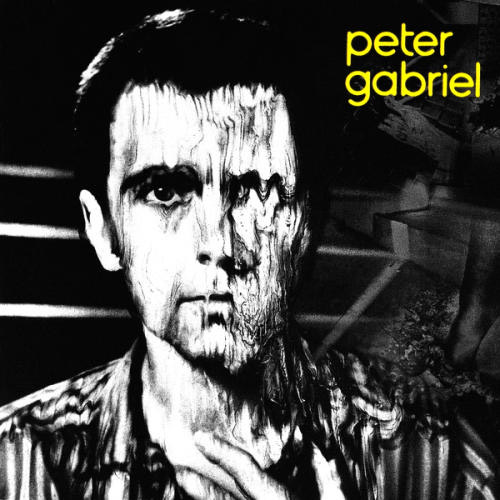 Joni Mitchell, Kate Bush, Eddie Vedder; the list could go on and on. I like music to have a story and to conjure up vivid imagery that sticks in the brain. All of the artists listed above have

 musical roots that stem form either blues or folk music, the music of the soul. The variations of these musical styles have a place in any country on Earth, whatever country you visit there is a unique tribal rhythm. Both Robert Plant and Peter Gabriel have always been artists that draw influence from other cultures and bring this influence into their own music, with the latter being a co-founder of WOMAD (The World Of Music, Arts and Dance festival).

 So at this point in time I would really like to create a piece that comes from a musical area of thought, employing the use of real world sounds and music. Examples of this technique being employed in and among my own influences can be located within The Who's monumental 1973 album"Quadrophenia". It tells the universal tale of teen angst through the story of 1960's Mod Jimmy, a boy whose personality is fractured into four separate pieces. The album also uses the sound of Jimmy's life to move the album's story along from place to place, almost like the "wild track" from a film soundtrack. The sound of the sea - particularly crashing waves - feature prominently throughout the album's running time; other sounds include a thunderstorm, the sound of a busy London train station and the melancholic echo of previous Who songs that fit in with the story's time period. These are the microscopic details that help set certain moods and allow the albums tonality to flow, and it is these little details that I would love to include in the finished piece.

